
Online Hifz Classes: How Quran Memorization Works with a Teacher
Published on
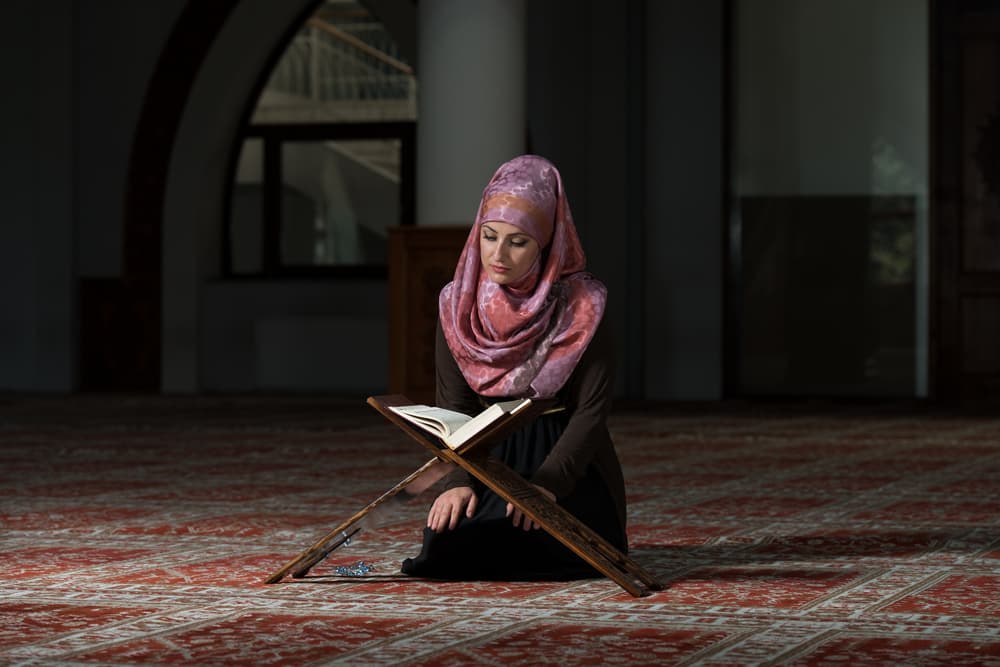
An online hifz class takes place by video, one-to-one: the student first recites what they have revised, then the portion learned since the last session. The teacher corrects every mistake, has the new portion repeated verse by verse and sets the week's work. Between classes, the student listens, repeats and revises the old material.
Many parents and adults ask themselves the same question before starting: can you really memorize the Quran remotely, behind a screen? The answer lies in how a session runs. Hifz rests on two things: listening to a teacher and reciting in front of them. Both work very well by video, provided the class is one-to-one and the revision at home follows.
Here is how it works with us, for a child as well as for an adult.
What exactly is hifz?
Hifz is memorizing the Quran by heart, surah after surah, with correct pronunciation. It is not only remembering words: it is remembering the right recitation, with the right letters and the right lengths. That is why you learn with a teacher, who hears what the student cannot hear in their own voice.
Most students start with the short surahs at the end of the mushaf, the ones recited in prayer, then move on to the longer ones. If your child cannot read Arabic yet, they can start learning to read at the same time with the Nourania method: memorizing and learning to read go very well together.
How an online hifz session runs
Each teacher adapts the session to the student, but the same steps almost always appear.
1. Revising the old
The session often begins with what the student already knows. They recite one or several surahs learned in previous weeks. The teacher checks that nothing has faded and notes what needs to be reviewed.
2. Reciting the week's portion
The student then recites the verses they were supposed to learn since the last class. The teacher listens to the end, then goes back over the mistakes one by one: a mispronounced letter, a forgotten vowel, a lengthening that was too short, a skipped verse.
3. Correction, right away
One of our teachers puts it simply: she corrects quickly and seriously, without letting the mistake settle in. A mistake repeated for a week becomes a habit, and it then takes more time to undo than it would have taken to learn correctly from the start. One-to-one, nothing goes unnoticed: the teacher is listening only to you.
4. The new portion
The teacher recites the new verses and the student repeats, verse by verse, until the pronunciation is right. This is the most important part for what follows: according to one of our teachers, the quality of the repetition during the session is one of the factors that move students forward the most.
5. Work until the next class
The session ends with a clear instruction: which verses to learn, which surahs to revise, what to listen to. For children, the teacher also talks it through with the parent.
What changes for a child
A child does not memorize like an adult. They often retain well by ear, but get tired quickly in front of a screen. So the teacher splits the session into short moments: we recite, we play a little, we tell a story, we go back to it. One of our teachers explains that she gave up the strictness of her early days for games, stories and encouragement, and that children progress much better this way (we talk about it in my child does not like their Quran classes).
The parent does not need to know Arabic. Their role is to settle the child in a quiet place, have them listen to the surah every day and ask them to recite for a few minutes. The two teachers we interviewed agree: revising at home with the family makes the difference, and its absence is the first obstacle.
What changes for an adult
Adults face other difficulties: work, evening tiredness, sometimes the embarrassment of reciting in front of someone. The one-to-one class answers this. Nobody else is listening, you can make mistakes without shame, and the schedule fits around your week.
For women who wish it, a female teacher is available: you recite in front of a woman, from home.
Many adults return to hifz after a long break. They know a few surahs, but with old mistakes. The teacher then starts by listening to what is already known and correcting what needs it, before moving forward.
Revising between classes: new, recent, old
Memorizing is easy; keeping it is harder. The Prophet ﷺ compared the Quran to a hobbled camel that runs away if you do not look after it (reported by al-Bukhari and Muslim). Revision is therefore not a bonus: it is the heart of hifz.
A simple organization, which many teachers use, splits the day's work into three:
- The new: the week's verses, repeated several times a day.
- The recent: what was learned in recent weeks, recited every day.
- The old: everything else, spread over the week so that each surah comes back regularly.
On top of that comes listening. For a student whose mother tongue is not Arabic, one of our teachers advises listening to the current surah three to five times a day, following the text in the mushaf and paying attention to the pronunciation. You will find more ideas in our 10 methods to memorize the Quran.
How long does it take?
This is the question everyone asks, and the honest answer is: it depends. On age, memory, starting pronunciation, the number of sessions and above all revision at home. We do not promise any duration.
To give you a point of reference, we asked our teachers about Juz' 'Amma: their answers are in the article how long to memorize Juz' 'Amma. After the first sessions, the teacher takes stock with you and tells you what they observe.
How to choose your pace
Our sessions last 30, 45 or 60 minutes, from four to eight sessions a month. For a young child, a short, regular session is often better than a long one now and then. An adult who wants to move faster can choose longer sessions, as long as they keep time to revise. All the options are on the pricing page.
Want to know how hifz would work for you or your child? Discover our online Quran memorization classes (hifz) and write to us on WhatsApp.
Frequently asked questions
Can you really memorize the Quran online?
Yes. Hifz rests on listening to the teacher and reciting in front of them, and both work very well by video. What matters is that the class is one-to-one, that the teacher corrects every mistake and that the student revises between sessions.
Do you need to read Arabic to start hifz?
It is not compulsory for the first surahs, which can be learned by ear. But learning to read at the same time helps a lot: the student can then follow the text in the mushaf and revise alone.
My child cannot sit still in front of the screen: is it still possible?
Often, yes. The teacher adapts the session: short moments, games, stories, encouragement. A 30-minute session is often a good starting point; the teacher takes stock after the first sessions.
Is there a female teacher for women?
Yes, a female teacher is available for women who prefer to recite in front of a woman.
What if I have forgotten surahs I learned a long time ago?
This is very common. The teacher starts by listening to what you still know, corrects the old mistakes, then organizes the revision so that these surahs come back regularly.