
My Child Doesn't Like Quran Lessons: What Our Teachers Have Learned
Published on
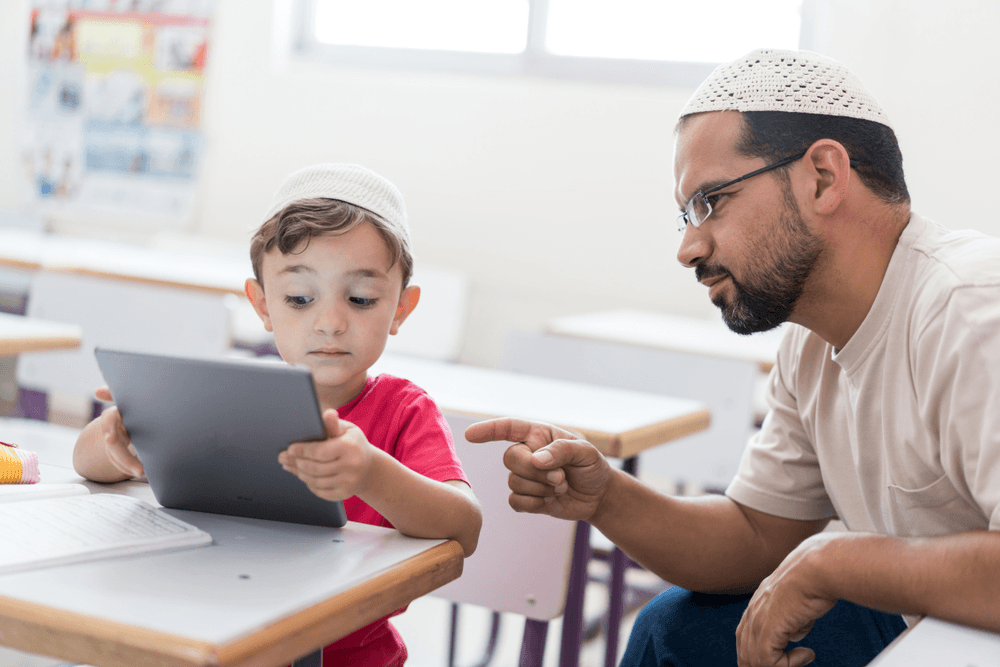
Many parents go through this: the child sighs as lesson time approaches, looks away during the session, or asks whether they can stop. You worry, you insist, and sometimes it gets worse.
We asked our teachers whether they had ever had students who didn't enjoy studying. Their answer is the same: yes, often. And many of those children are now the ones who look forward to their lesson. Here is what they learned.
The method one teacher gave up
One of our teachers speaks frankly about her early days: "At the beginning, I used strictness and straight rote memorization." She quickly saw that this approach didn't suit children, especially at a distance, and that it put them off learning.
So she dropped it completely and replaced it with games, stories and encouragement. "The results are much better."
Behind a screen, a child who feels judged switches off very quickly. They may turn off their camera, look elsewhere, or simply stop retaining anything.
What changes a child's mind
Build a bond with them
"If the student likes their teacher, it is one of the factors that matters most," explains our second teacher. Before teaching, you have to win the child's trust: talk to them, take an interest in them, laugh with them.
Make the session lively
Our teachers use:
- educational games, to revise letters or verses without it feeling like a test;
- stories that children love, about Islam and the Companions of the Prophet ﷺ;
- humour and encouragement, so the child dares to make mistakes.
"Their view of the lesson changes completely," sums up one of them.
Explain differently, as many times as needed
For our second teacher, the difference between a student who likes the lesson and one who doesn't is "often the teacher": their ability to simplify, to manage the session and to re-explain in different ways when the child doesn't understand. A child who doesn't understand ends up believing they are "bad at it", and loses the desire to learn.
It is not only down to the teacher
Our teacher adds honestly: "The whole responsibility doesn't rest on the teacher." They can succeed just as they can fail. The child's age and character, the time of day chosen for the lesson and the atmosphere at home also play a part.
What parents can do
- Don't turn the lesson into a punishment or a threat ("if you're not good, you'll get Quran").
- Choose a good time: not right after school when the child is exhausted, nor during their favourite cartoon.
- Celebrate every step forward: a new surah, a letter pronounced well.
- Talk to the teacher if the child isn't engaging. In a one-to-one lesson, the method, the pace or the length of sessions can be adapted.
This is one of the advantages of one-to-one lessons that a mother pointed out: they "allow real interaction with each child and personalised support". Her children, she wrote to us, "love their lessons".
In summary
- Many children who are reluctant at first end up enjoying their lessons.
- Strictness and straight rote memorization push children away, especially online.
- What works: a bond with the teacher, games, stories of the Companions, encouragement, and adapted explanations.
- Parents have a role too: the right time, praise, and dialogue with the teacher.
Discover our online Quran classes for children, taught by patient teachers, and see our prices.