
Learning Islam as a Beginner: Where Do You Start?
Published on
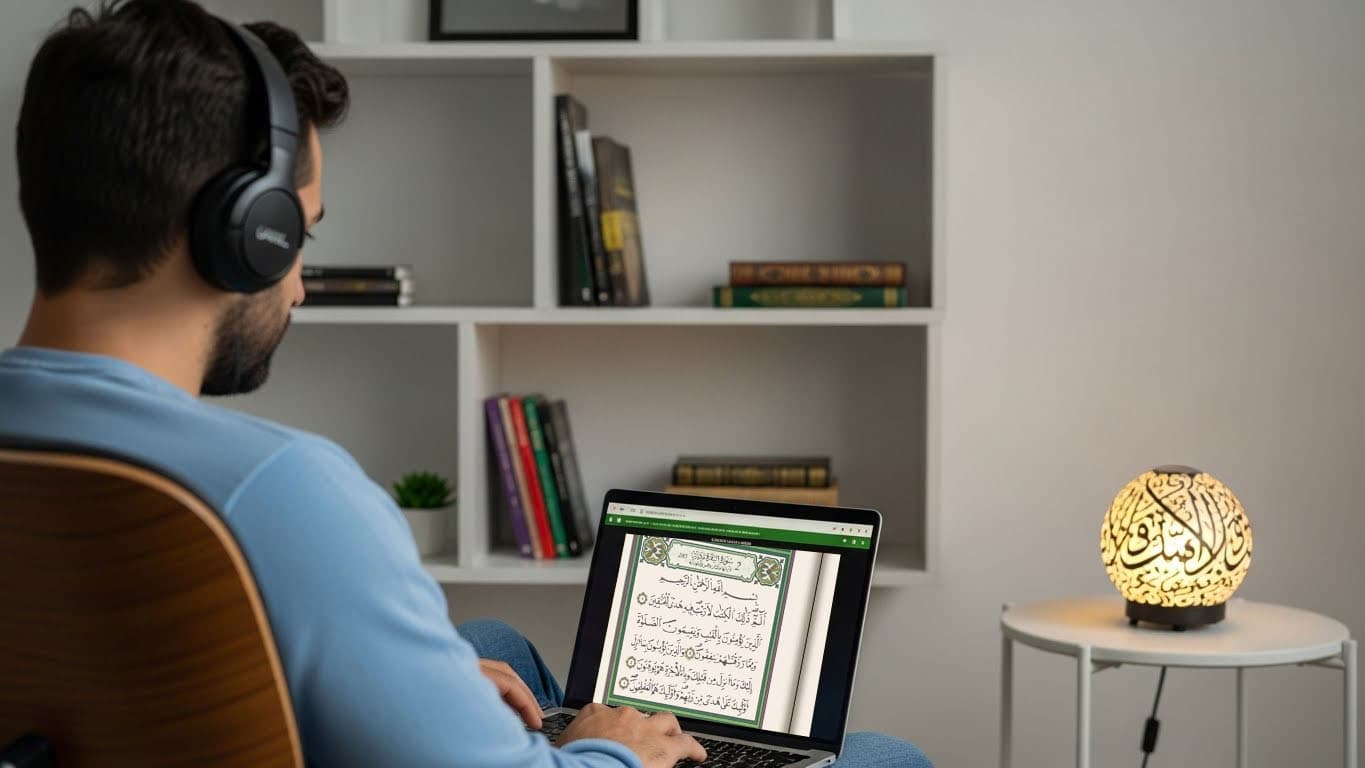
To learn Islam as a beginner, start with the essentials: what a Muslim believes (the six pillars of faith), then daily practice (purification and prayer), reading Arabic so you can recite al-Fatiha, and finally the life of the Prophet ﷺ. Go in that order, with a teacher who answers your questions.
You have just embraced Islam, or you were born into a Muslim family without ever really learning your religion. Either way, the same question comes up: where do I start? On the internet, everything gets mixed together. One piece talks about a detail of prayer, another about a discussion between scholars, a third about a subject you don't understand yet. You end up skimming everything and building nothing.
This guide offers a simple order, designed for an adult starting from zero. It doesn't replace a teacher, but it helps you know what to learn first.
Why the order matters so much
When you discover Islam, you often want to know everything right away. But that energy runs out quickly if you begin with the most advanced questions. A beginner needs solid foundations: understanding what they believe, knowing how to pray, being able to read a few words of Arabic. The rest comes afterwards and builds on those foundations.
The order suggested here is not a religious rule. It is a teaching path, which the teacher adapts to each person. Someone who already prays can spend more time on faith; another, who knows the theory well but doesn't know how to perform wudu', will start with practice.
Step 1: understand the foundations of faith
Everything starts with what a Muslim believes. Islam is often summed up in two sets that are easy to remember.
The five pillars of Islam, that is, practice:
- the declaration of faith (the shahada): bearing witness that there is no god but Allah and that Muhammad ﷺ is His messenger;
- prayer;
- obligatory charity (zakat);
- fasting in the month of Ramadan;
- pilgrimage to Mecca, for those who are able.
The six pillars of faith, that is, belief: faith in Allah, in His angels, in His Books, in His messengers, in the Last Day and in destiny.
Knowing them by heart is a start. Understanding them is something else: what does it mean to believe in destiny when you are responsible for your actions? Who are the angels? Why several Books and several messengers? These questions are at the heart of our online aqeedah classes, where a teacher explains each pillar in simple words.
Step 2: purification and prayer
Prayer is the pillar you live every day, five times a day. For a new Muslim, it is often the most concrete priority. And before prayer comes purification: you don't pray without being in a state of purity.
In the first weeks, the goal is to learn:
- ablutions (wudu'): the actions, in order, and what breaks them;
- the full wash (ghusl): when it is required and how to do it;
- the times of the five prayers and the number of units in each;
- how the prayer unfolds, standing, bowing, prostrating, sitting, and what is said in each position.
These subjects belong to fiqh, the science that explains practice. Our online fiqh classes go through them step by step: the teacher explains each action, in order, and answers your questions. They stick to the basics, without going into specialists' discussions.
Step 3: learn to read so you can recite al-Fatiha
In every prayer, you recite al-Fatiha, the surah that opens the Quran, followed by other verses. Many beginners first learn it in phonetics, written in Latin letters. It helps in a pinch, but phonetics distorts sounds that don't exist in English, like ح or ع.
Two things can be done at the same time:
- learn al-Fatiha and a few short surahs by ear, repeating after the teacher, so you can pray right away;
- learn to read Arabic with the Noorani Qaida method, which starts from the letters and vowels and leads to reading the text of the Quran.
You don't need to speak Arabic to practise Islam. But being able to read the text brings you closer to the Book and to your prayer. Our guide to learning the Quran as a beginner details these first reading steps.
Step 4: get to know the life of the Prophet ﷺ
Once the basics are in place, studying the seerah puts a face to everything you have learned. You discover how the Prophet Muhammad ﷺ lived, prayed, treated his family and neighbours, and went through hardship. The pillars of faith and practice then take on their full meaning: you see the religion lived, not just explained.
Our online seerah classes follow his life in order, starting from the period before the revelation.
And what are the "Islamic sciences"?
You will often see the expression "Islamic sciences". It refers to the main subjects studied to know your religion:
- aqeedah: faith and its pillars;
- fiqh: practice (purification, prayer, fasting, zakat, pilgrimage, daily life);
- seerah: the life of the Prophet ﷺ;
- tafsir: the general meaning of the verses of the Quran;
- hadith: the words and actions of the Prophet ﷺ, and how they have reached us;
- tajweed: the rules of Quran recitation;
- the Arabic language, which opens access to the texts.
A beginner doesn't need to study everything at once. The four steps of this guide already cover aqeedah, fiqh, reading and seerah. Tafsir, hadith and tajweed will follow naturally afterwards.
Learning alone or with a teacher?
Books and websites can help, provided you know how to choose them. The real problem for a beginner is that you can't ask a book your questions. Yet it is often the simplest questions that block you: "Does my prayer count if I make a mistake?", "What do I do if I don't know al-Fatiha yet?"
With a teacher, these questions get a clear answer, without judgement. That is the point of a one-to-one lesson: you are alone with your teacher, you can say you don't know, ask them to repeat, go back over a point. Our lessons are 100% online, by video call, from home. Sessions last 30, 45 or 60 minutes, at times set together.
Sisters who prefer can study with a female teacher. Many women feel more comfortable asking their questions about purification or prayer.
A few tips to get off to a good start
- Go step by step. One idea properly understood each week is better than ten skimmed.
- Practise what you learn. A rule of prayer is remembered by praying, not by rereading it.
- Keep one main source at the start, so you don't get lost among explanations that seem to contradict each other.
Frequently asked questions
Do I need to speak Arabic to learn Islam?
No. You can understand the faith, the prayer and the life of the Prophet ﷺ in English. You only need to learn in Arabic what is recited in prayer, starting with al-Fatiha. Learning to read Arabic comes afterwards, at your own pace.
I have just converted: what should I start with this week?
With ablutions and prayer, learning al-Fatiha by ear. At the same time, take the time to understand the six pillars of faith. A teacher can help you organise these first weeks according to your situation.
Can a woman study with a female teacher?
Yes. Sisters who prefer are taught by a female teacher, one-to-one and by video call.
I'm embarrassed to ask basic questions. Is that a problem?
Not at all. The one-to-one lesson is made for this: nobody else hears your questions, and none is too simple. Teachers are used to complete beginners.
How long does it take to learn the basics?
It depends on your pace and on what you already know. The teacher takes stock with you at the start, then shows you your progress over the sessions.
Not sure which subject to start with? Message us on WhatsApp: we listen to your situation and point you to the course that suits you.